Someone asked me recently how to use AI ethically. It was the last question in a session, and I nearly answered it in a sentence. Then I realised I could talk about it for hours.
Here’s the honest version. The full conversation is in the video linked below, if you’d rather watch.
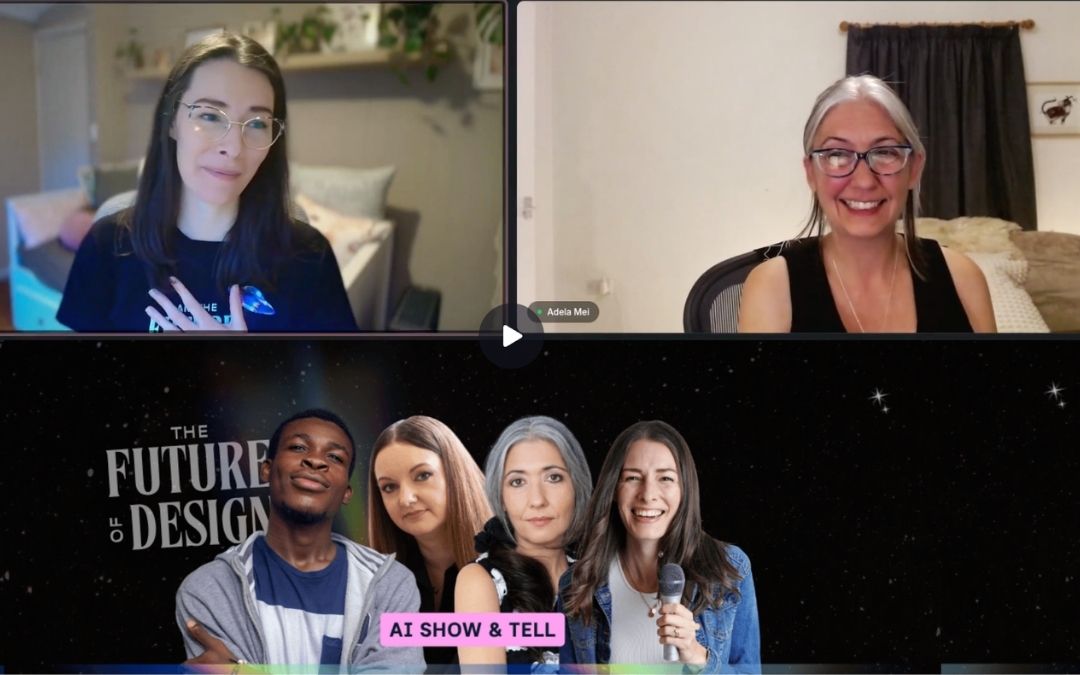
Based on my Q&A at the Future of Design Summit 2026.
Can AI ever be ethical?
No. I don’t think AI can be ethical – full stop. It isn’t a thing that has ethics. What we have is a choice about how we use it, and who we’re comfortable handing our attention, and our money, to.
That distinction matters, because it puts the responsibility back where it belongs. Not on the tool. On us.
Which AI is the ethical choice?
There isn’t a clean one. There’s only the call you can make today, with what you know today.
Take the big players. OpenAI signed a contract with the US military. That doesn’t sit right with me, so I don’t use ChatGPT. Anthropic, at the time of writing, walked away from a military deal, so I’m more comfortable there for now. “For now” is doing a lot of work in that sentence. They’re in the middle of a copyright fight as I write this, and any of these companies could do something tomorrow that changes my mind.
So the real question isn’t which one is good. It’s whether you can go to bed at night feeling you haven’t done anything too bad.
Do you need to use AI for everything?
No – and noticing when you don’t is a good place to start. It’s the same logic I use for sustainability. You don’t need to ask AI what to wear to your friend’s house for dinner. Just watching your own usage, and catching yourself reaching for it out of habit rather than need, is a real practice in itself.
But my actual work here isn’t policing anyone’s choices. It’s awareness. The more we understand what’s really happening, the more mindful we can be – with AI, and with everything else. It’s no different from knowing where your food comes from, or where the things you buy are made. Awareness first. Mindfulness follows.
Why data centres in the UK worry me
Because we didn’t choose this, and it’s happening on land we can’t get back. The UK has quietly become Europe’s data centre hub. Amazon and Google are investing billions here to build them, and they want to put one up in the next county over from me. They’re clearing farmland to do it.
We’ve just had the worst drought I can remember in my lifetime. It hasn’t properly rained here for months. The country should be green and it’s yellow, end to end. And into that, we’re building data centres that will draw on water we simply don’t have.
It’s overwhelming. It’s an environmental problem and a government-level one, and I want to be clear: I’m not going to become a government spokesperson or an activist. That isn’t my role on the planet, and pretending I can change that layer would only burn me out.
What I can change is smaller and closer. How I run my business. How I talk to people. How I share what I know.
I’m also very aware of where I’m standing. I’m in the UK. I’m privileged. I have the absolute privilege to choose – to say I’ll use this and not that. Plenty of people don’t have that choice. There’s real inequity in the world, and it’s rarely as black and white as “just don’t use the bad one.”
Why nature is part of the answer
A few summers ago I was talking about how to run a sustainable business and build sustainable websites. Now the conversation is how to use AI ethically and sustainably. It’s the same bigger picture, wearing different clothes.
And it’s exactly why I’ll always keep pointing us back to nature. Not just because it’s good for you – though it is. Because stepping away from the tech genuinely matters for our brains and our nervous systems.
A lot of us who care about the environment carry a low hum of despair. You look around and think, why does nobody care? That feeling is real, and it’s heavy, and you can’t pour from it. So I try to find some distance. To step back and think: okay – in my world, in my little company, with my big cats – what can I actually do? How do I stay positive?
Because that, in the end, is the most important thing. To stay healthy, happy, and positive enough to keep making a real impact.
Where do you draw your line?
That’s my honest answer. Not a rulebook – just the line I try to walk, one choice at a time.
I’d genuinely like to hear where you draw yours?
Sources
- OpenAI’s US military deal — BBC News, “OpenAI changes deal with US military after backlash” (3 Mar 2026). OpenAI amends its Pentagon contract after criticism.
https://www.bbc.co.uk/news/articles/c3rz1nd0egro - Anthropic’s refusal, and the fallout — BBC News, “Trump orders government to stop using Anthropic in battle over AI use” (27 Feb 2026). Anthropic deemed a “supply chain risk” after refusing military access on surveillance and autonomous-weapons grounds.
https://www.bbc.co.uk/news/articles/cn48jj3y8ezo - Anthropic’s copyright settlement — Reuters, “US judge approves Anthropic’s $1.5 billion settlement of copyright lawsuit” (20 Jul 2026). The largest known US copyright settlement, over books used to train Claude.
https://www.reuters.com/world/us-judge-approves-anthropics-15-billion-settlement-copyright-lawsuit-2026-07-20/ - UK as Europe’s data centre hub — GOV.UK, “AI Opportunities Action Plan: One Year On” (Jan 2026). Five designated AI Growth Zones and £28.2bn of investment.
https://www.gov.uk/government/publications/ai-opportunities-action-plan-one-year-on/ai-opportunities-action-plan-one-year-on - Google building UK data centres — Reuters, “Google sets out $6.8bn UK investment” (16 Sep 2025). £5bn over two years, including a new Waltham Cross data centre.
https://www.reuters.com/sustainability/climate-energy/google-sets-out-68-bln-uk-investment-ahead-trumps-state-visit-2025-09-16/ - Data centres on rural land — BBC News, “Hundreds gather to oppose £13bn data centre” (2026). A £13bn data centre planned within the North Devon UNESCO Biosphere — protected rural land created in 1976 to safeguard the environment while local communities thrive.
https://www.bbc.co.uk/news/articles/c39ywnvn234o
Video





0 Comments