
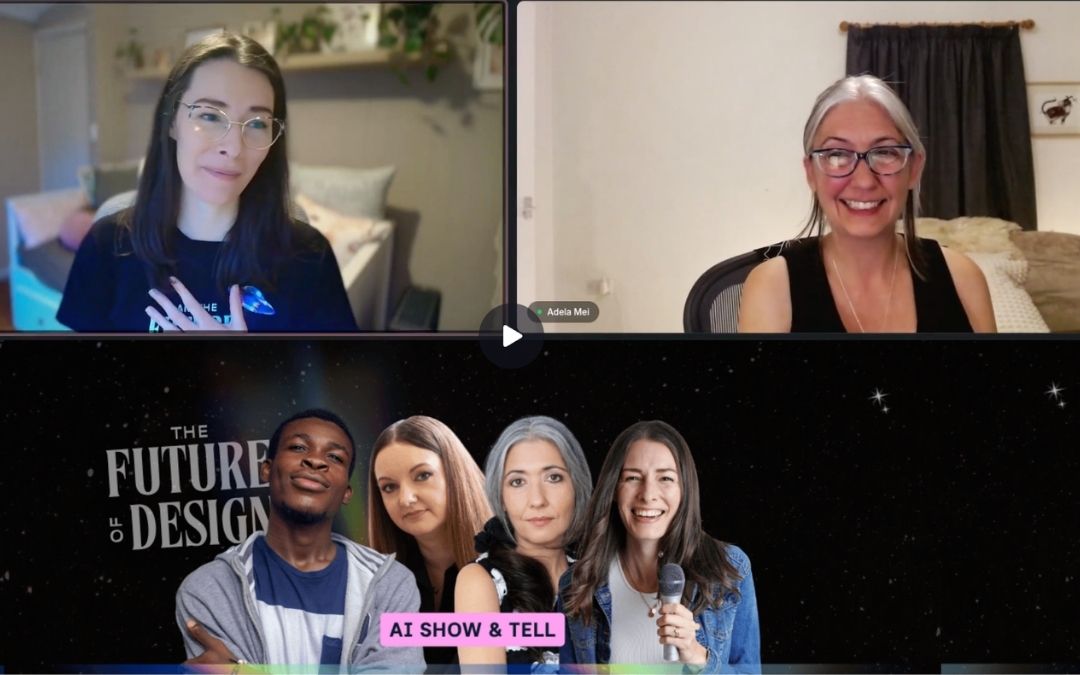
I recently sat down with Alexia Lynn for her Creative Confessions podcast, and somewhere in that conversation I said something I’ve been turning over ever since: that I place urgency on things that, in reality, aren’t urgent at all. We’re business owners, not surgeons. Nobody’s life is on the line if a project ships a day later. And yet I’ll feel my body respond as though it is.
That’s the thread I want to pull on here, because it sits right at the centre of why I talk about “talk to a tree, not ChatGPT”.
It’s a genuine choice I’m making, over and over, about where I go for a reset when my nervous system says it needs one. Why urgency feels real even when it isn’t.
Alexia asked me directly: how much of the emergency feeling in our work is self-imposed? It’s a good question, because the honest answer is: most of it.
I set myself a date, I put pressure behind that date, and then I treat the date as though it has a life of its own. My body doesn’t know the difference between a genuine deadline and one I invented for myself.
What’s helped me is reframing that self-imposed urgency. It sounds simple. And once you can see a deadline as a container you built, you can also see that you’re allowed to rebuild it.
The inbox is not your life.
We got onto email, inevitably, and the strange psychological trick we all play on ourselves with it. Inbox Zero feels like being in control of your life. It isn’t. Those two things have nothing to do with each other, really – but our minds make the connection anyway, because a tidy inbox is a much easier thing to control than life really is.
I’ve noticed the same compulsion Alexia described: notification arrives, focus breaks, and five minutes later I’m checking the same inbox for the fourth time in an hour, no wiser than before. The fix isn’t a better app. It’s Do Not Disturb, properly used – not just for calls, but for the blocks of work where I actually want to think.
Information overload is a systems problem
This is where my environmental science background keeps showing up in how I think about business. I trained in ecology before I trained in web design, and the thing ecology teaches you early is that everything is connected – remove one piece and the whole system feels it.
A broken contact form isn’t just a broken form. It’s fewer leads, which is less business, which means marketing effort that no longer converts. One small failure is felt across the whole ecosystem.
The same is true of the noise we take in every day. We’re not built to process the volume of information coming at us – task-switching constantly, AI tools feeding us “the next thing you should do,” other people’s opinions arriving faster than our own thoughts can form. It’s not a failure on our part to feel overwhelmed by that. It’s a design problem, and design problems need systems, not more willpower.
What actually resets a maxed-out nervous system
Here’s the part I keep coming back to. Alexia mentioned that her best ideas turn up while she’s shooting hoops, not at her desk – because doing something physical breaks the loop of constantly being in your head. I feel the same thing on a walk: wind on your face, noticing what’s actually around you, and somewhere in that noticing, an idea arrives that an internet search was never going to give you.
That’s the whole case for talking to a tree instead of ChatGPT. Not that AI has no place – I use it too, for the practical parts of running a business. But it cannot give you what a walk outside gives you: a nervous system that remembers it’s allowed to stop, and a mind that’s briefly quiet enough to hear its own next idea rather than someone else’s.
Sustainable business is the same practice
This is also, I think, what sustainability actually means in a business context – not only the environmental sense, though that matters enormously to me, but the sustainability of how we work day to day. Fewer, deeper client relationships instead of constant churn.
A genuine “this is finished” moment at the end of a project, rather than an open loop that never lets you rest. Boundaries around scope, so that generosity doesn’t lead to burnout.
None of that is about doing less because you’re not capable. It’s about building a way of working that can actually continue – the same word, sustainable, whether you’re talking about a business or a forest.
Where this goes next
If any of this resonates, my digital detox guide walks through the practical side of what I’ve only sketched here – the boundaries, the notification habits, the deliberate stepping-away that makes room for actual thinking again.
And if you want the fuller conversation this post came from, including where I talk more about ecosystems thinking in web design and the oracle deck project I’m building, the full episode is out now on Creative Confessions with Alexia Lynn.
Go outside first, though, and reflect on what this means to you, in nature.





0 Comments